The first time I tried a walking food tour was in New York, a trip to mark the arrival of my naughty forties, and ever since then I’ve been hooked.
Walking to different establishments to sample varied cuisines is right up my street. In fact, I don’t even feel guilty for pigging out while ‘on tour’; as far as I’m concerned, I’m walking off those pesky calories that I’ve consumed so it’s a win-win.
So when Eating Europe launched a ‘Hip Eats and Backstreets’ tour in Paris a few years ago and invited me along for the day, I was gonna make damn sure I would pull out all the stops to get on that Eurostar. And I did.
The day started early; the train from St Pancras was to arrive in Paris for around 11.30am. And the Hip Eats and Backstreets Food Tour would be leaving from Jardin Villemin park at 12.30pm, leaving us plenty of time to find our bearings and locate the park. For this I was grateful; as the name of the tour suggests, this was very much a ‘backstreet’ park – away from the tourists and something of a local haven.
In fact, it was located in what the Parisians refer to as the 10th Arrondissement. If you imagine the districts in Paris (Arrondissements) start at number 1 from a central location in the city and then, in a spiralling motion, they increase by number in a snail shell pattern.
So as you can imagine, the 10th Arrondissement, where Jardin Villemin park could be found, is in a residential district away from the centre of Paris and about a 10-minute walk from Gard Du Nord.
I set off in high hopes; I was certain that this walking food tour was not only going to delight my taste buds, it would also enable me to see some of the lesser known areas of Paris and maybe even do a bit of mingling with the locals.
The foodies
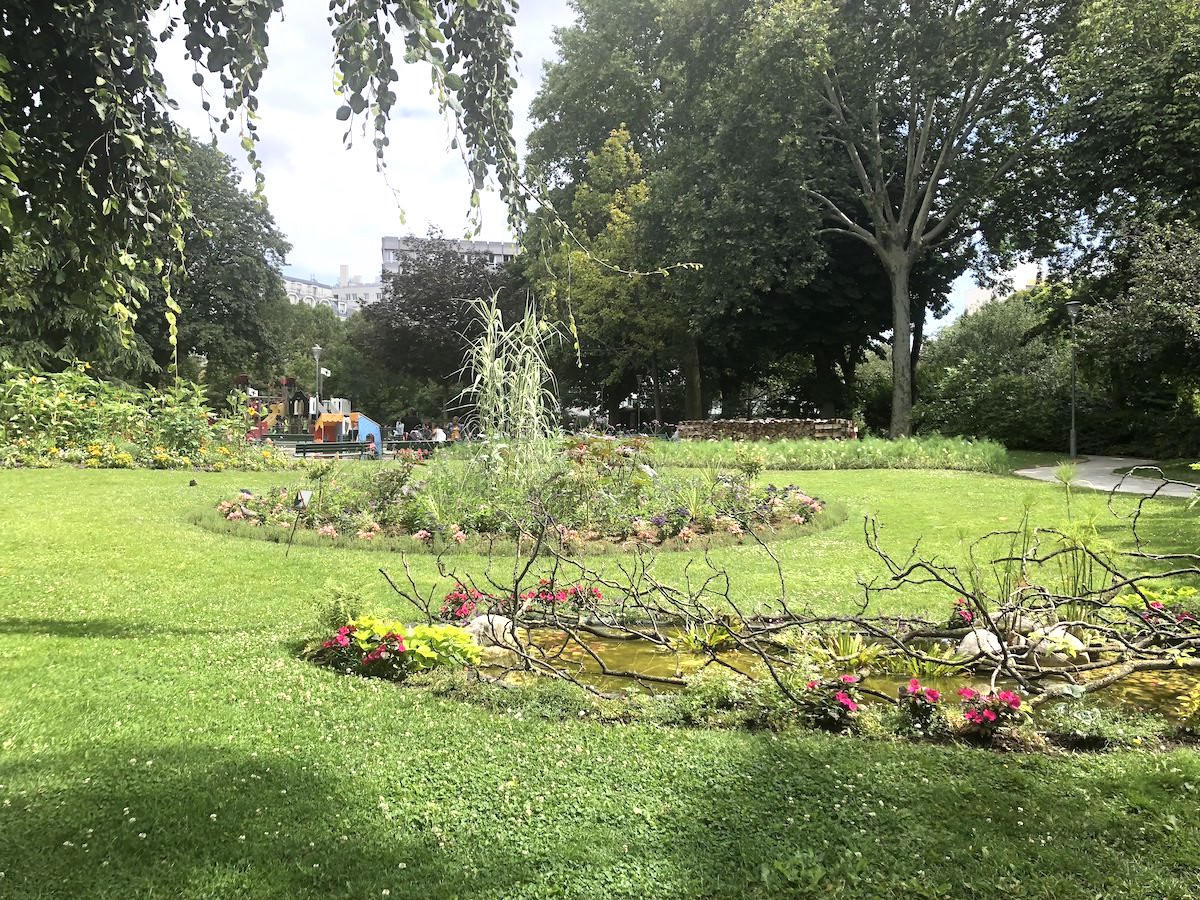
We were the first to arrive in the park so I used this to my advantage by taking some nice shots of the colourful blooms in the flower beds. We didn’t have to wait long before our guide, Leo, rocked on up, and within a few minutes, the rest of the attendees started to appear.
They included Leah from Texas who had lived in Paris for four years; Anita from Toronto, who was a freelance travel writer; Sebastian the Instagrammer who had lived in Paris for over 40 years and his partner Natalie, who was also on the gram; Daniella, a photographer from Brazil and another Parisian resident; and finally Cindy, a magazine editor.
Once we’d all gathered, Leo gave us a bit of background about the history of Paris, its layout and a little of the political divide of the city. I’m not really into politics but I did enjoy the educational start to the tour – and this set the scene for the rest of the day.
Just a few things my grey matter thanked me for…
- There are 20 districts in Paris, with a mayor for each district and then a main mayor for Paris. Districts 1-6 are where most of the tourists head and it’s the most expensive part of city, as well as being highly sought after districts to live in.
- The garden we met in to start the tour was once a military hospital built in 1870.
- The west part of city is more right wing, with wealthier residents who are typically a bit older. The central district is a bit of a balancing act between the right and left wings, while the east side sees the residence of more working class residents, historically speaking at least. Interestingly, the reason why the working class settled in the east is because the ocean (on the west side of the city) would blow smoke from the factories in an easterly direction – hence why the middle and upper classes avoided this area.
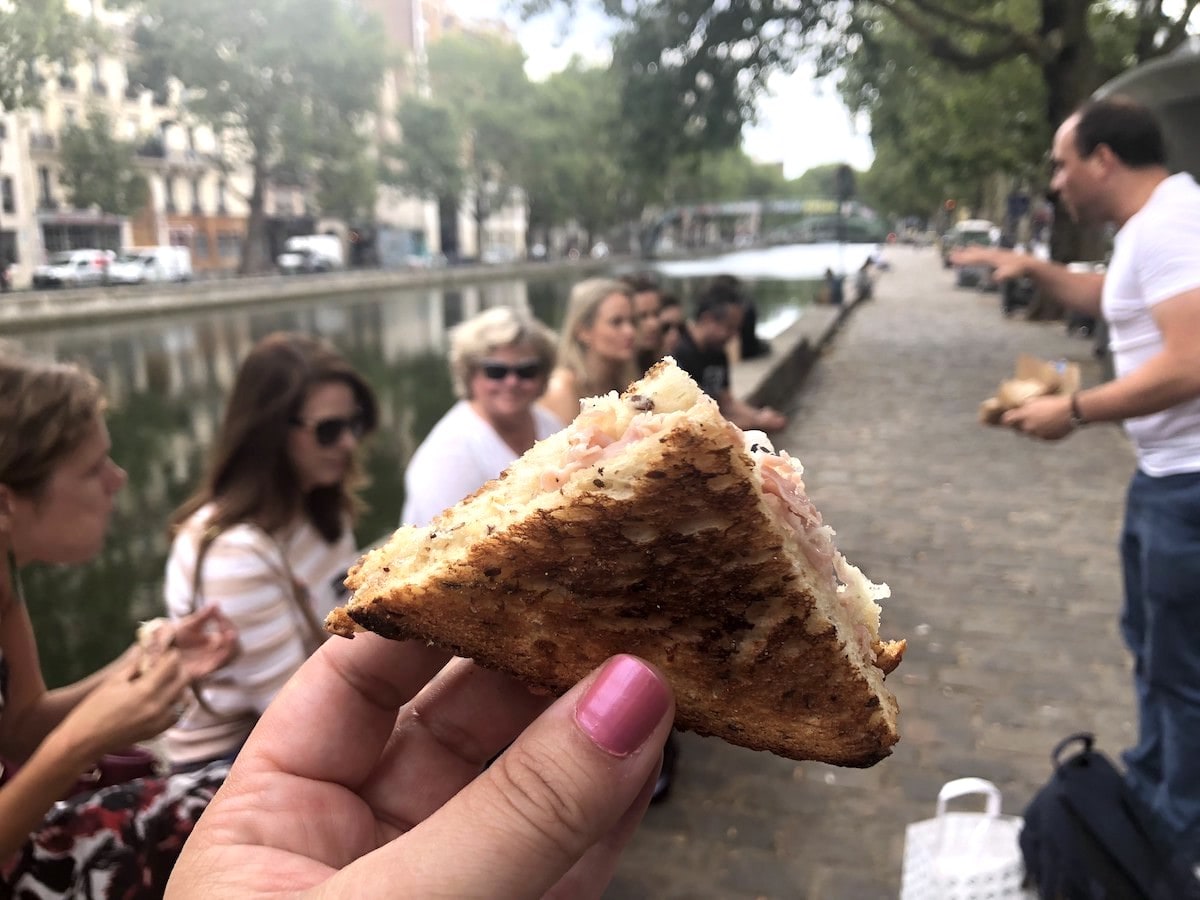
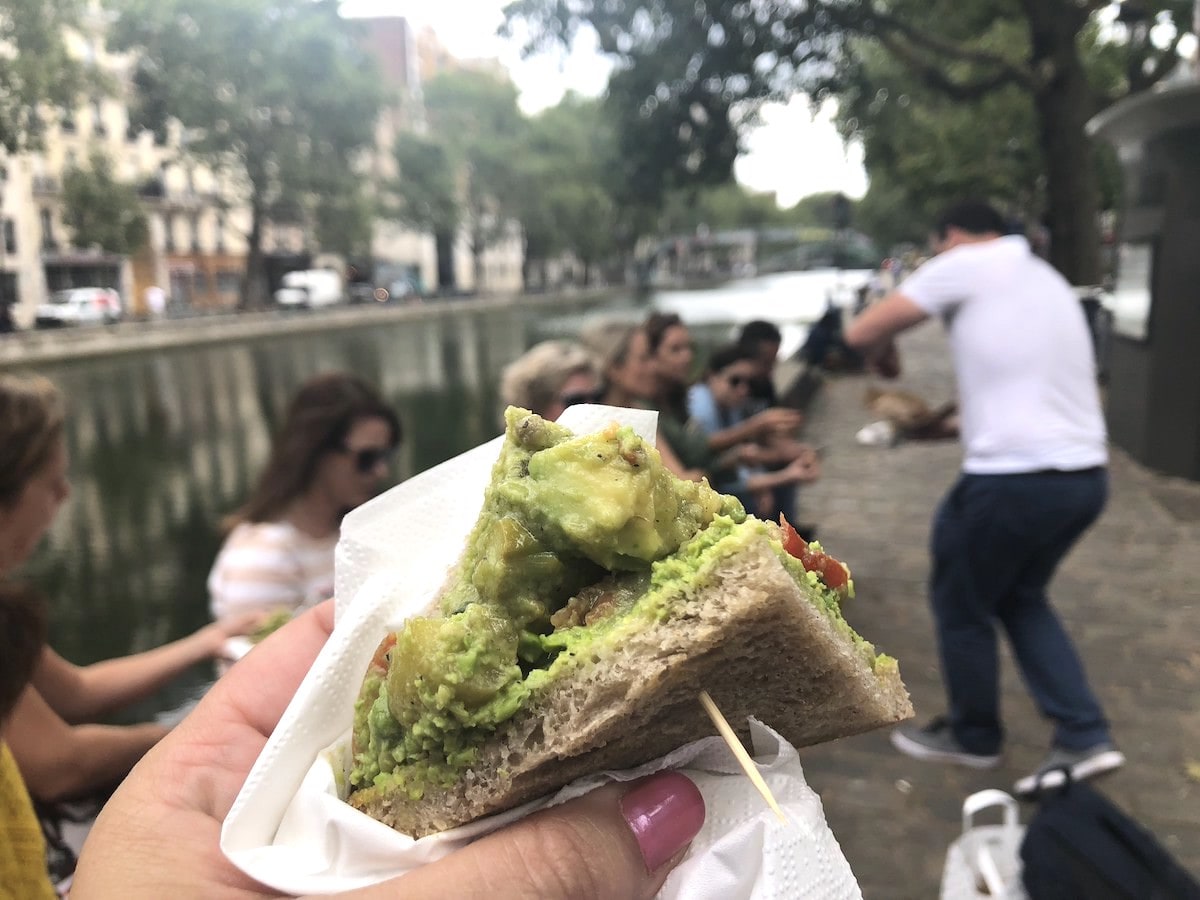
The Hip East And Backstreets food tour was to offer both a mix of more ‘hip’ foods, as well as traditional delights, and our first stop (being relatively early in the day), was adjacent to the picturesque Canal Saint-Martin for a sampling of Croque Monsieur from Fric-Frac.
Apparently Fric-Frac was popular with the locals for both breakfast and lunch, and I learned that Croque Monsieur translated as ‘taking a bite out of a gentlemen’. So what is it? A posh version of a cheese toastie pretty much, consisting of ham, Emmental cheese and French bread. It’s actually one of my favourites; in fact it’s what I usually opt for when I visit Cafe Rouge, so both the food and the picturesque setting got full marks.
Leo also gave the group a taste of Fric-Frac’s best-seller – a sandwich consisting of pine nuts, avocado, capers, peas pesto, tomato and asparagus. It was certainly different to anything I’ve tried before, but I preferred the Croque Monsieur.
Canal chat
As we walked along Canal Ourck, we learned of its significance in the city. The canal was built following Napoleon’s order in 1810 to bring fresh water and merchandise into the city, and it was the tax on imported wine that helped pay for the canal.
As we crossed a little bridge to reach the other side, Leo stopped to offer more of an insight into Paris’ historical, political and cultural influences and how they helped transform the city. According to our very knowledgeable guide, 60% of the buildings in Paris, dated between 1850-1870, were influenced by Haussmann, a French administrator responsible for the transformation of Paris from its ancient character to the one that it still largely preserves.
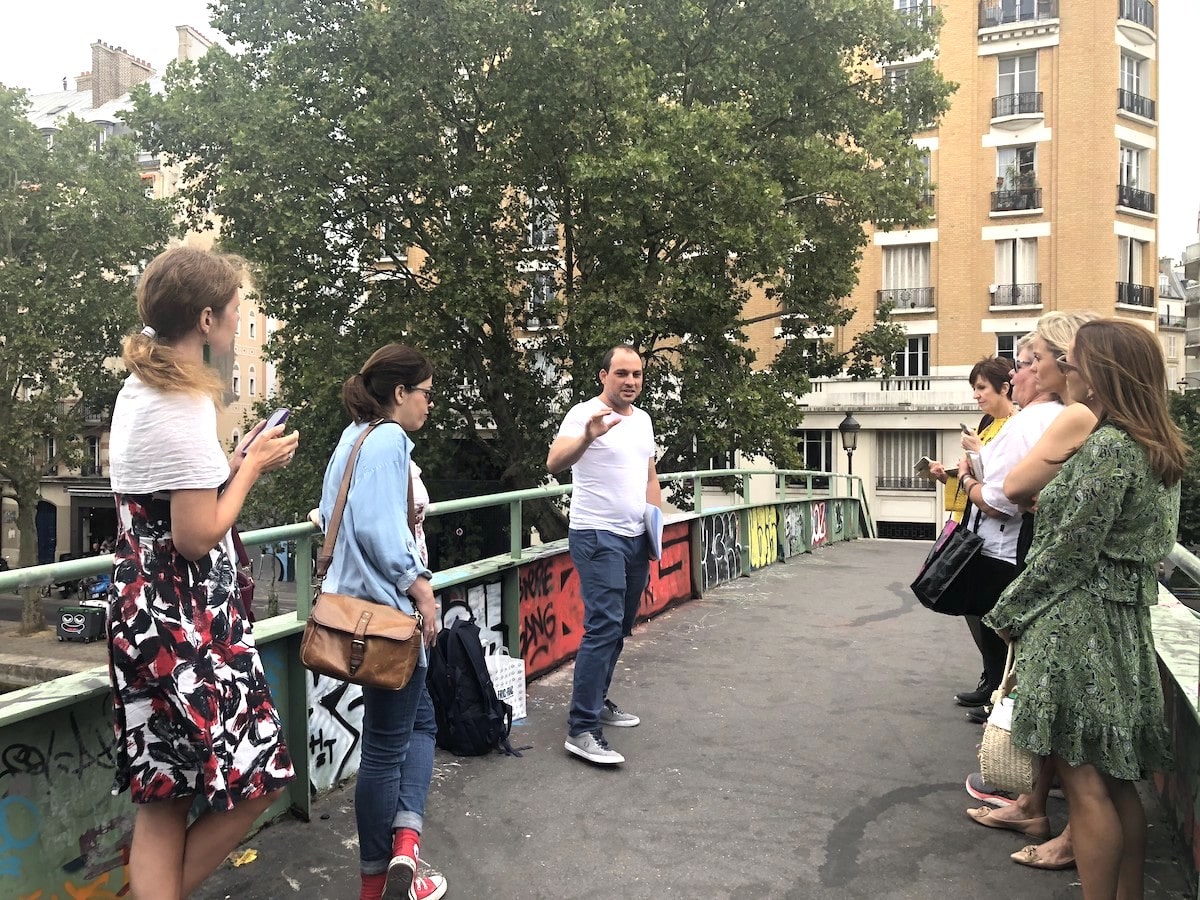
I also discovered that the reason why Paris made its boulevards so wide was to control crowds of street protestors, whereby cannons could line the streets ready to deter would-be activists.
Next on the agenda was a delightful little place called TSF (9 Rue Alibert); the brainchild of husband and wife team, Thomas and Sophie Folie. Sophie was originally an artist and one day decided to open a restaurant.
We were offered ‘ham prince of Paris’, saucisson, pâté, cured pork and courgettes – the sort of diet you’d expect a typical French person to enjoy. There was plenty to look at while there – shelves rammed with gourmet treats; from chocolates and sweets to cheese and meat. It’s a great place to stock up on some French goodies to take home, let’s put it that way.
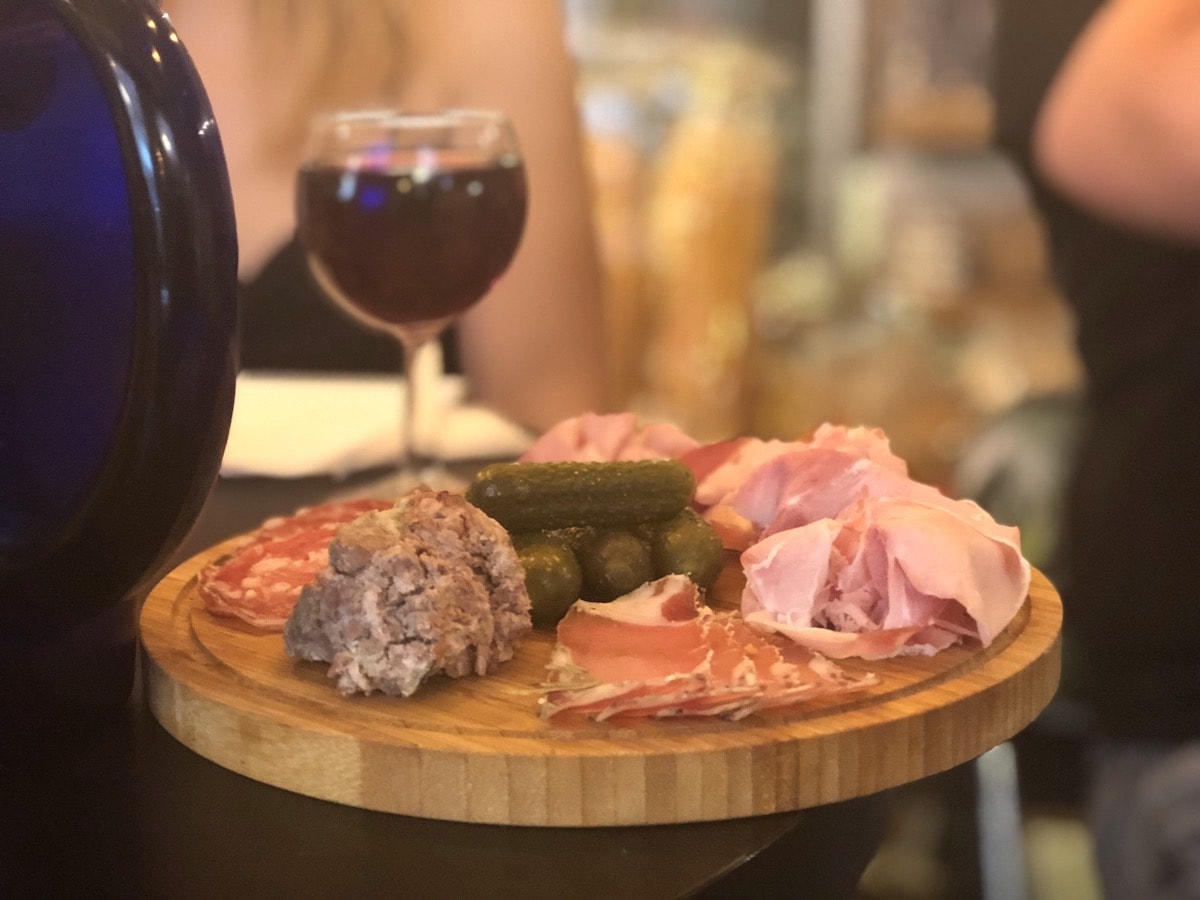
While delighting my tastebuds on the pâté and bread, I learned that half of the sandwiches sold in France consist of bread, butter and ham and that, for the first time in 2018, hamburgers overtook ham sandwiches in terms of popularity.
En route to the next stop, Yann Couvreur, we were shown the two bars that were first hit by the Paris attacks on 13th November, 2015. The reason they chose bars in this district rather than the tourist area was to do damage to the ‘hip and trendy’ population – the place where the next generation usually socialised.
It was a poignant reminder of the events that took place that night; one that many of us won’t forget, but I’m glad that Leo took time to explain what happened and the reason the area was targeted. It’s the sort of thing you just don’t learn from watching the news, so it was fascinating to get an insight.
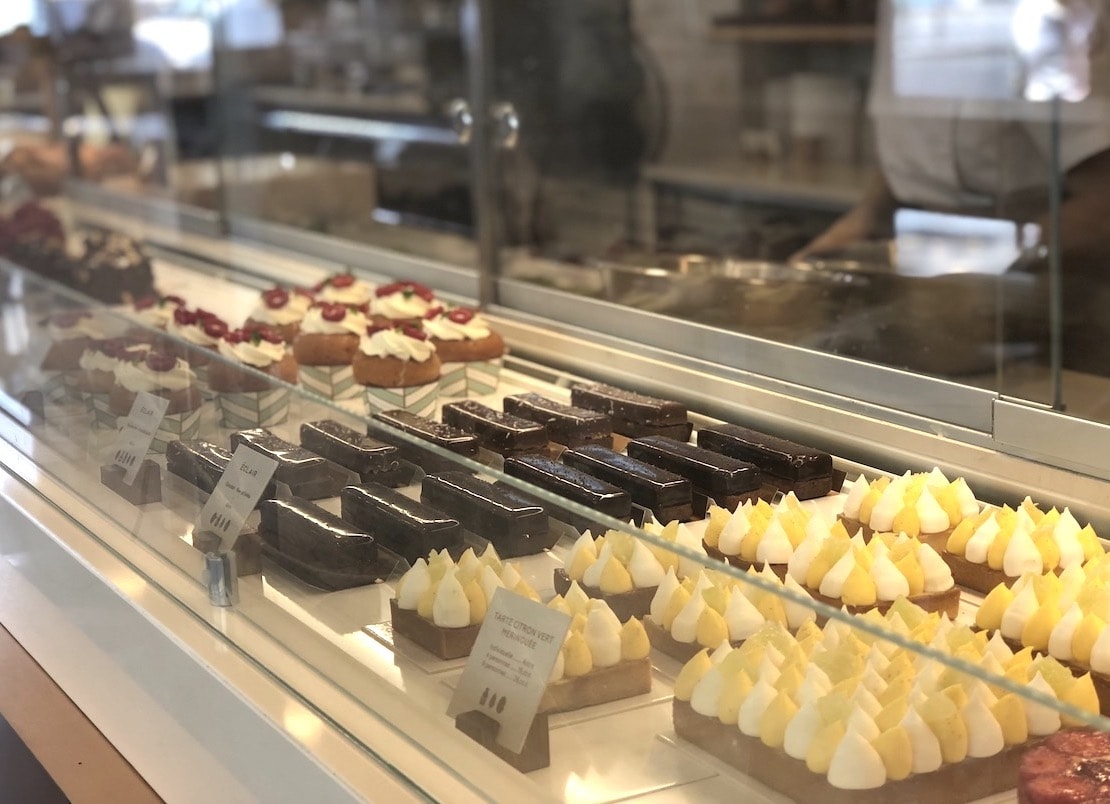
Yann Couvreur (137 Avenue Parmentier) belonged to a 27 year old entrepreneur, who has been described as a ‘genius of pastry’ – and this was the third of his shops that had opened in the city. It was one of those places that you walk into and you’re met with rows of the most pristine looking little cakes, pastries and delicacies.
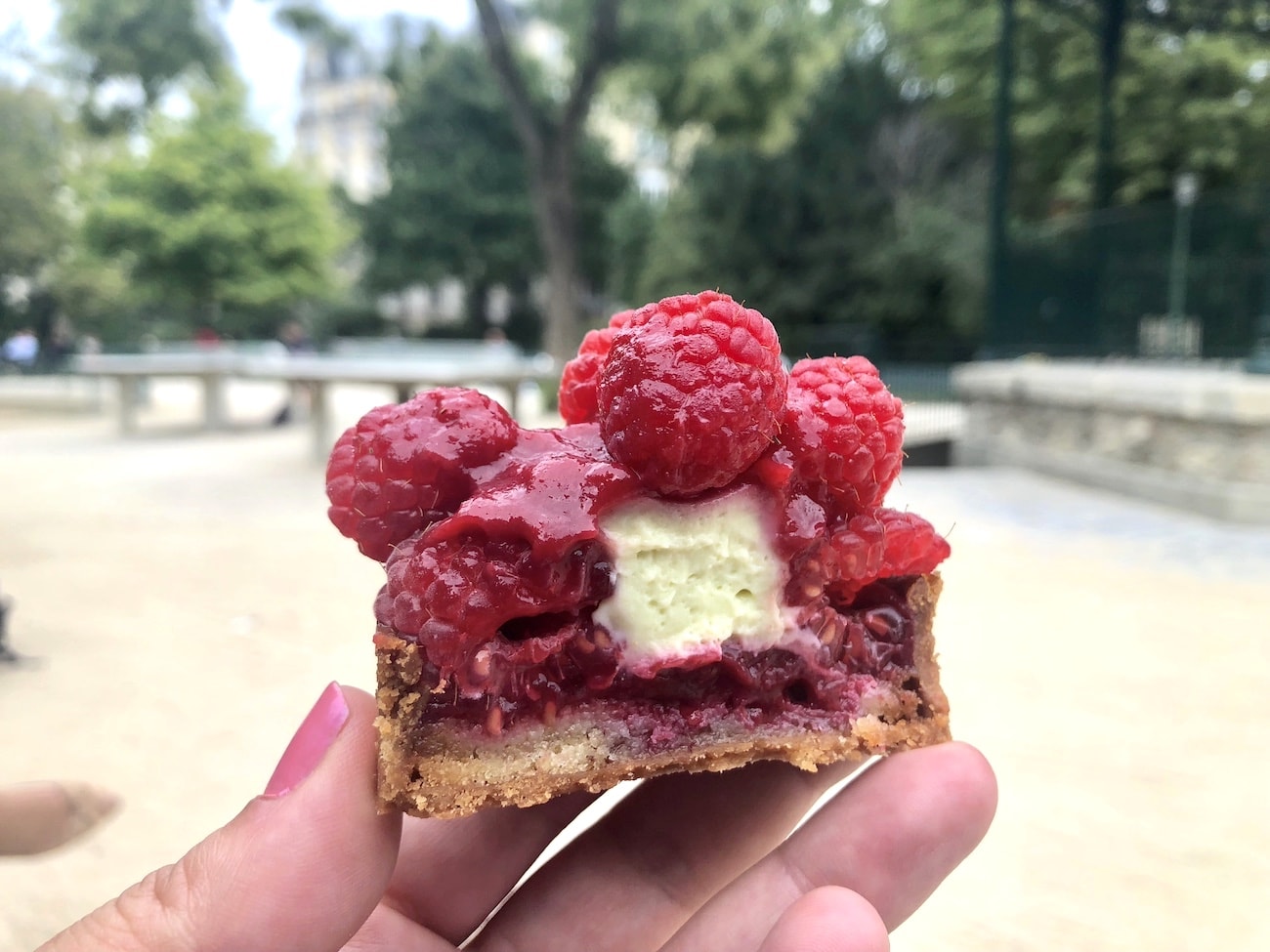
Leo bought a selection of them (Tarte Framboise Estragon – tarragon and raspbery – and the Eclair Caraibe) to be shared later – as the next stop was the main course!
The main course
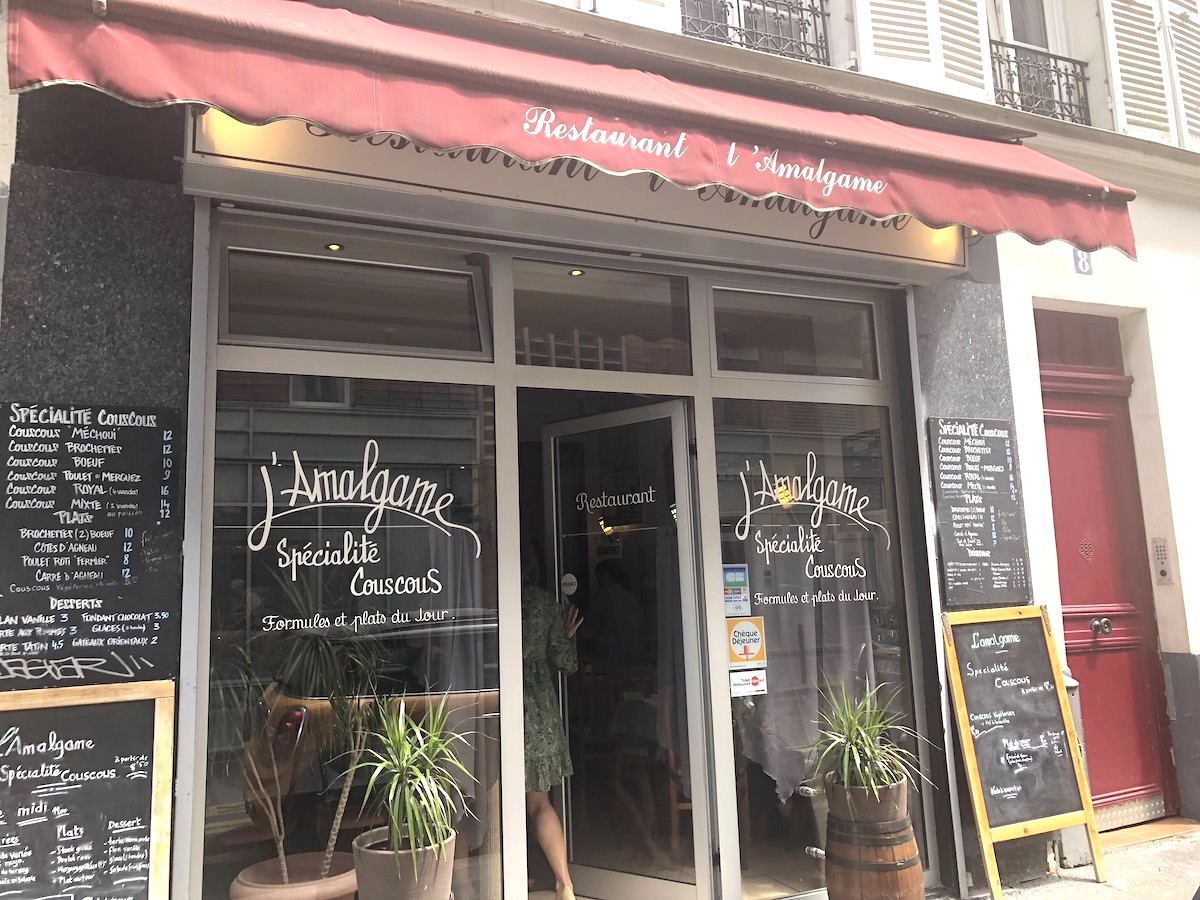
If I had my list my favourite place on the Hip Eats and Backstreets Food Tour, L’Amalgame would be it without a shadow of a doubt. If fact, trust me on this, install the name of this place into your long term memory and the next time you’re in Paris, make every effort to go there.
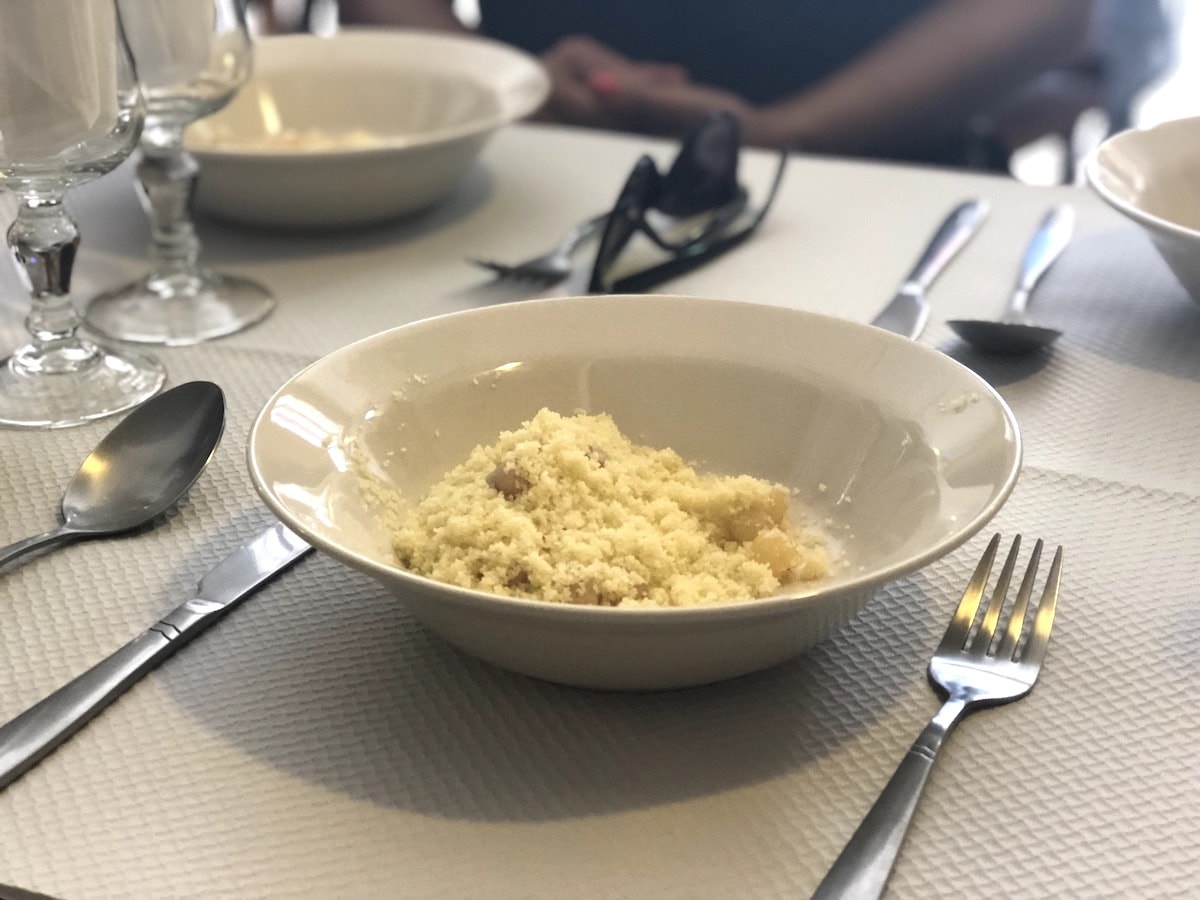
The wife of this family run business spends two hours every day making couscous from scratch. And it was the most delicious couscous I’ve ever tasted. The grains were tiny – and I’m talking minute. They were so tiny that when the dish first came out I mistook it for parmesan cheese!
The couscous was served with turnip, zucchini, carrot, celery, green beans and something called merghez, which is a spicy Algerian sausage – a dish that has been around since 200 BC, apparently. I could have left the sausage, but the couscous was the best I’ve ever had.
As always, Leo had a story to tell while we were visiting L’Amalgame(12 Rue Bichat), which was owned by an Algerian family. After the Second World War, France needed to rebuild the country and Paris needed some extra help. So it opened its doors to places like Tunisia and Morocco. In 1962 Algeria became independent and two million returned to France and brought couscous with them. Now it’s the third most popular dish to eat in France.
It was great to learn about how cultures have influenced France, and in particular Paris, over the years. And I think it’s wonderful how some of the same traditions that have been used for hundreds of years are still alive today.
One of the journalists mentioned that some of the other food tours were “a dime a dozen” (yes, she was American) and that they all went to the patisserie, the cheese shop, the butchers etc, and that it was refreshing to visit somewhere different – off the beaten track and somewhere that the locals frequent.
The conversation soon turned to how French women stay so slim (yes, I’ve often wondered this!), and Leo explained that their secret is eating small portions but multiple courses. In between meals they’ll often eat a couple of bites of cheese to stave off the hunger. Something else I learned was that you should never eat cheese straight from the fridge; it should always be eaten at room temperature.
Say cheese
Talking of cheese, the next stop was in fact a cheese shop called Paroles de Fromagers (41 Rue du Faubourg Du Temple). This was a very interesting place – as they took us out the back of the shop and down a set of stairs into what looked like a cellar, we discovered that they actually housed their own ageing room, so they could get really creative on how they developed their cheese.
We sampled goats cheese, La Brie savinnon and cheese that smelt like cauliflower but I can’t recall the name. I learned that cheese is very seasonal, so when it’s made in summer (when the cows eat flowers) it’s very yellow in colour and quite floral.
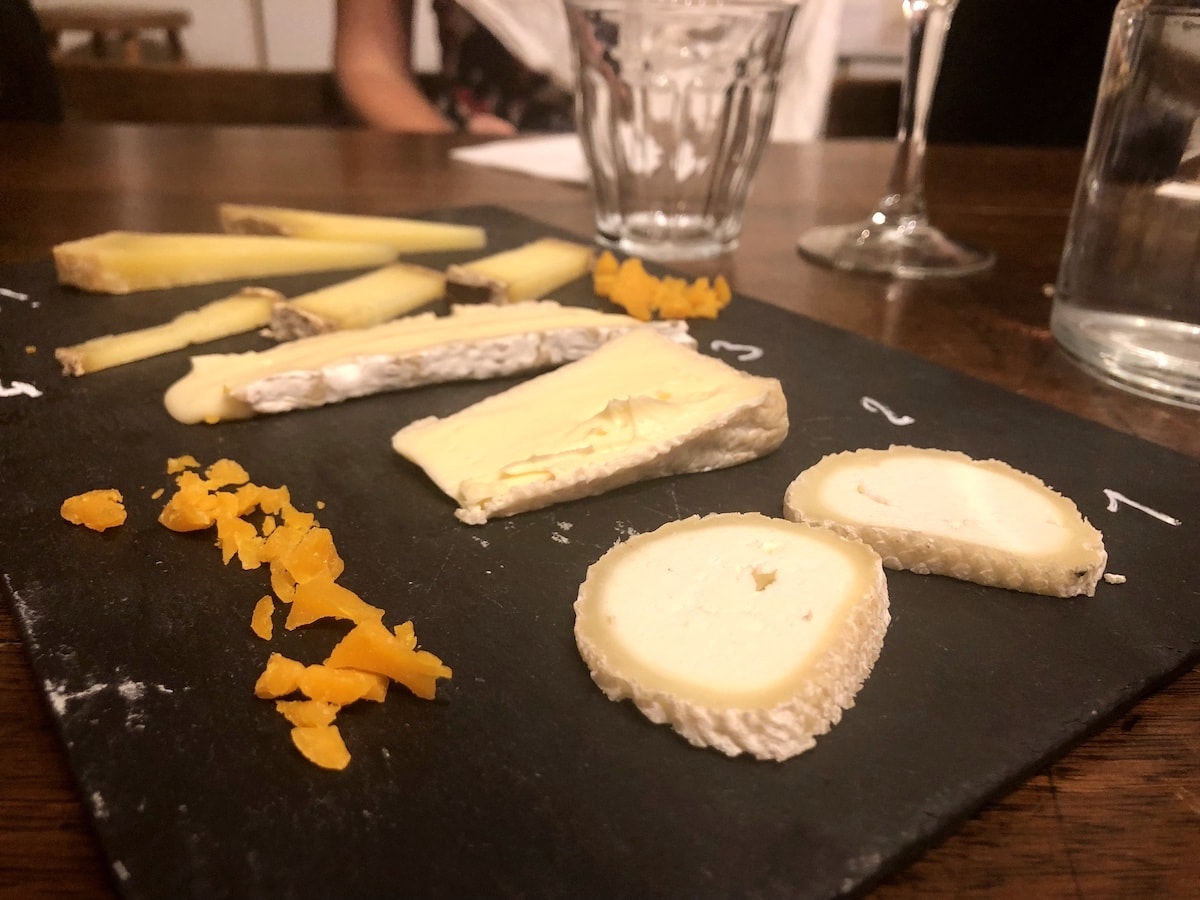
I’m not the biggest fan of cheese – give me a slither of cheddar and I’m happy but anything more adventurous than that, then I could take it or leave it. But I have to admit, they did have some very interesting cheese – some of which was helped down by crackers, bread and some lovely samples of chutney. They included Crottin de chevre (Goat), Brillat Savarin (Triple Cream), Brie de Meaux, Beaufort (Pressed cheese) and Tomme de Savoie.
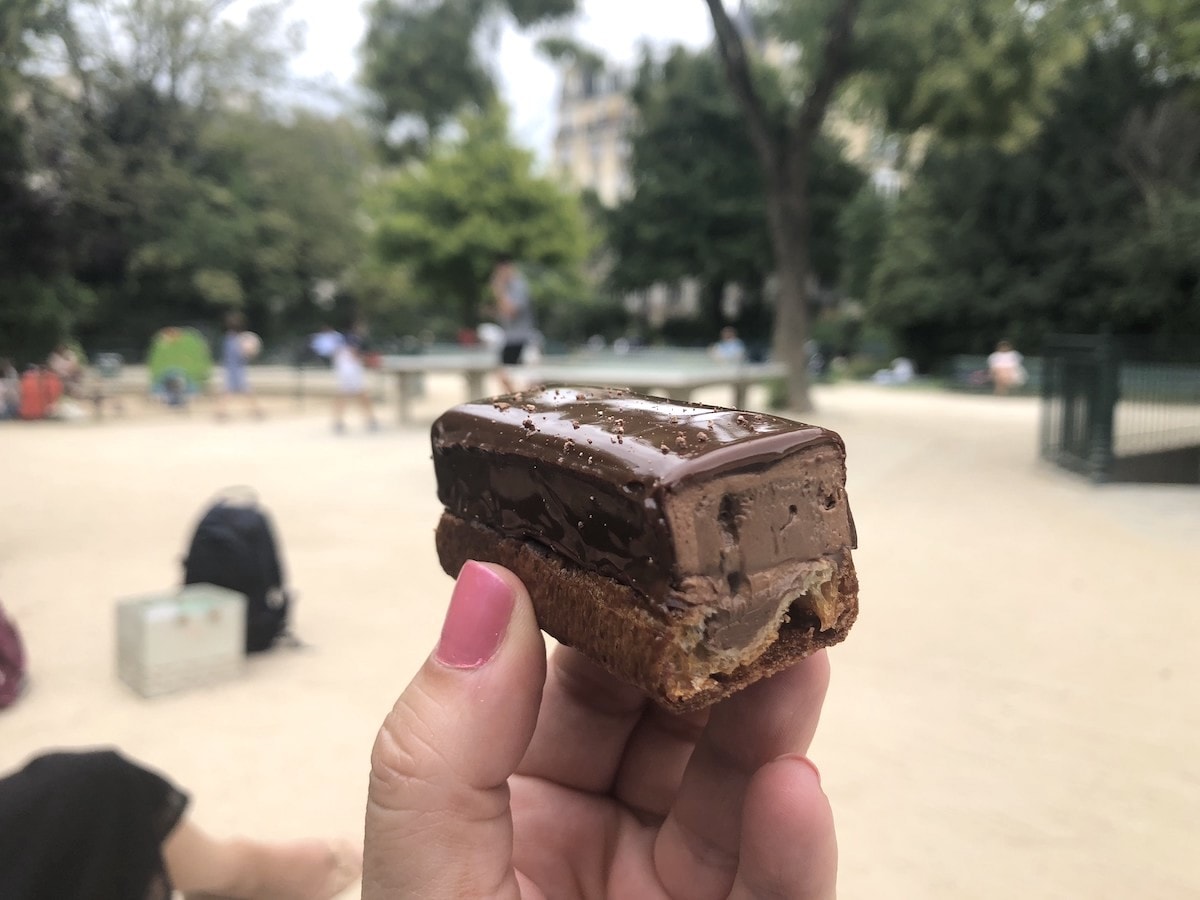
After the cheese feast, we headed to the third district (popular with the fashion conscious and those who like café culture), and stopped at a park to eat the sweet delights that Leo had picked up earlier at Yann Couvreur.
The sweets, as Leo liked to call them, all looked rather expensive, but you knew they were going to taste divine. And they did. But because they looked so immaculate, it was almost a shame to eat them. Almost, but not quite.
We were presented with chocolate eclairs and raspberry pastries to sample – and even though I’m a HUGE cake fan and can usually find room in my belly for second, third and fourth helpings- on this occasion I had to admit defeat. I polished off a raspberry pastry and that was me done. There’s a fine line between being comfortably full and uncomfortably full – and I didn’t want to taint my experience by crossing it.
I thought that was the end of the walking food tour, but there was one last surprise that Leo kept up his sleeve – a visit to a traditional style coffee shop called Buly (45 Rue de Saintonge). It was an interesting shop because on one side there was a perfume counter (historically so that women could be entertained with new scents), while the gentlemen would sit at the bar, drink coffee and no doubt put their hand in their pockets for their wives and partners when they have found their ideal ‘parfum’.
There is only one way I can describe Buly – quintessentially Parisian. It has to be seen to be believed.
Other interesting snippets of information I picked up on the Hip Eats and Backstreets Food Tour were…
- At every bus stop in Paris there’s a USB port where you can charge your mobile device. How cool is that? We totally need to nick that idea for London.
- The boat is the symbol Paris; some 2,500 years ago a tribe from the north of France settled in Paris and they started taxing boats that were heading to the Atlantic – hence the reference.
- 75 million people visited the central square in Paris after the 2015 attacks to pay their respects to those who died.
Worth a go?
What I loved about the tour was our guide’s enthusiasm and thirst for knowledge. He brought the tour to life, offered interesting nuggets of information at every corner and it seemed like there wasn’t one question that he didn’t know the answer to. For me this speaks volumes about the people behind the company and their passion – brownie points all round.
The Hip Eats and Backstreets food tour offered just the right mix of walking with regular stops to point out places of interest and sample different menus, taking us from breakfast through to lunch. The quality of the food was second to none and included stops at a sandwich shop, a delicatessen, an Algerian couscous restaurant, cheese shop, pastry shop and finally a coffee shop. It felt like we were eating like the locals in off-the-beaten-track establishments, offering a real glimpse into Parisian life.
In terms of prices, the four-hour tour costs 95 euros, which I think is great value for the whole experience; you’re not just immersing yourself in the city’s varied cuisine, but also learning about its cultural, social, political and historical influences.
Oh and don’t let the relatively small samples of food at each stop fool you; you’re fit to burst after four hours of walking and eating! As long as I was kidding myself that I was burning calories at a similar rate as I was consuming them, then I’m all game!
I do of course have some useful nuggets of advice from the experience if you do end up booking it for yourself…
- Wear comfy shoes/trainers
- Take a bottle of water to sip on
- Give yourself plenty of time to arrive early so that you’re not rushing
- Come hungry! A very light breakfast should sort you out until it’s time to take the tour
- Carry a couple of notes – it’s nice to leave a tip for your guide – the industry standard in France is 15%
- Take lots of pictures to relive memories of a great experience once you’re home
And that pretty much sums up my thoughts of Hip Eats and Backstreets in Paris. Appetite fully sated, it was time to return home that night feeling happy, contented and very tired. And this time I didn’t try to disguise the food baby under my jumper – I waddled back home carrying my bulging belly like a badge of honour. And what a badge.
You might also like…
- A Short Break To Bordeaux
- 20 Hours In Paris With No Kids – Bring It On!
- A Review of a Soho Walking Food Tour
Pin Me For Your Travel Board